



November 12, 2025.
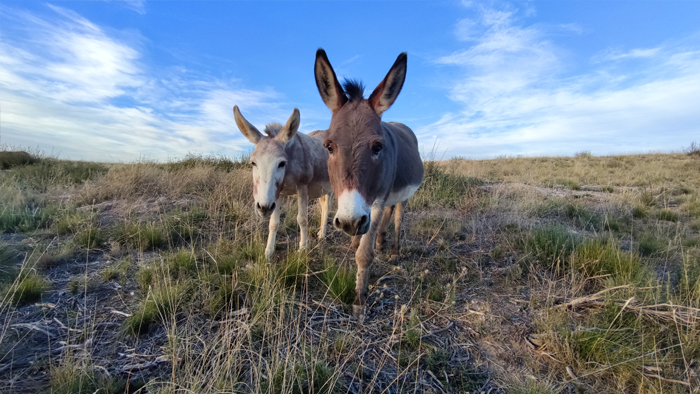
It is about ruquets recovered from abuse and abandonment, which the Miranda Foundation has renaturalized in a process of returning to nature. Ruquets with their own names and a history of overcoming and resilience that makes them an empowered, capable, self-sufficient and wild group, and at the same time socialized to facilitate the interventions of theMas de Melons TeamDonkeys that fall in love!
The pilot project is being supported by: Miranda Foundation and the Forest Science and Technology Center.
La Mas Melons Nature Reserve has started a new one pilot project de grazing with donkeys to improve the habitats of the steppe birds that live in this protected natural space, especially those that nest on the ground, such as the ganga. The donkeys that arrived this Wednesday will live in semi-freedom and graze in an initial area of 45 hectares, which have just been perimetered, to carefully monitor the development of the project and evaluate the degree of adaptation of these animals to the special conditions of the reserve.
Likewise, the evolution of the vegetation in the pasture area and the diet of the donkeys will also be monitored with the aim of continuing this form of habitat management in the rest of the reserve in the future.
La reintroduction Grazing with donkeys provides numerous benefits at an ecosystem level, given that their grazing is more subtle, even more so than that of sheep. The low soil compaction they cause, as well as the rusticity and adaptability of these equids to steppe vegetation, is very beneficial for environments such as the one in the Mas Melons reserve.
The bargain, the most benefited
Donkey grazing will especially benefit the bargain, endangered species at the Catalan level and classified as vulnerable in the Catalogue of threatened native wildlife. Among other things, this species requires a loose plant structure, with a plant cover of less than 40% and a height of the vegetation in general not exceeding 20-25 centimeters. Mas Melons is home to the largest population of this bird in Catalunya.
This plant structure is also suitable for hosting populations of the short-billed lark, another species in danger of extinction in Catalonia and which, currently, is only present in the Alfés rudder.
Likewise, the project will be beneficial for other steppe birds such as the torlit, the blue jay, the jay, which find their ideal habitat in fallows, wastelands and crops managed by flocks of sheep, olive and almond fields of this unique space. Also for other animals that inhabit the nature reserve such as the ocellated lizard, the spurred toad or some species of bat.
Support from the Miranda Foundation and the CTFC
The pilot test that is part of the European project LIFE Connect Ricotín, has the support of the Miranda Foundation and the Forest Science and Technology Center (CTFC).
The Miranda Foundation has provided the herd of donkeys and will be responsible for training the Mas de Melons team so that they can collaborate in guaranteeing the day-to-day well-being of these animals, and provide the most appropriate management. They will also monitor and assist in the process of adapting the animals to this arid space, with unique vegetation characteristic of steppe territories.
For its part, the Forest Science and Technology Center will monitor the entire project, together with the team from the Mas Melons Nature Reserve.
The 5 protagonists: Cinnamon, Clove, Muscat, Xarel·lo and Troy.
News and dissemination: